From Cameroon to Côte d’Ivoire, Mali and Nigeria, Catholic communities across West Africa are marking the 2026 Season of Creation through prayer, advocacy, communication, partnerships and practical action.
Celebrated from 1 September to 4 October, this year’s Season of Creation carries the theme “Living Water”, inspired by Ezekiel 47:9,12 and the image of water flowing through the land and bringing life wherever it goes. It invites us to reflect on ecological conversion not only as something we pray for, but as something that should flow into how we care for our communities, ecosystems and common home.
Eco-spirituality: allowing faith to flow into action
At the heart of the Season of Creation is an invitation to deepen our relationship with God, one another and creation.
In Mali, the Salesian Sisters of Don Bosco in West Africa marked the opening of the Season of Creation online on 1 September, inviting their communities into a journey of prayer, reflection and action.
These moments of prayer and reflection matter because ecological conversion begins with recognising creation as a gift entrusted to our care. But the Season also challenges us to ask what that recognition requires of us once prayer ends.
Living Water must flow into action.
Advocacy: protecting the waters that sustain life
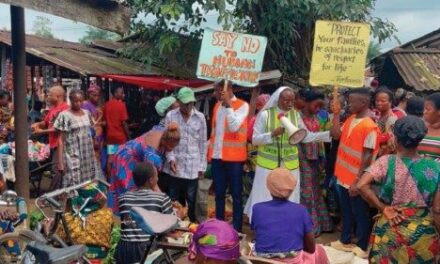
In Cameroon, that action has included raising awareness about threats to water and communities.
Sr Solange Lomessoas of the Dominican Sisters of Blessed Imelda used video to draw attention to pollution affecting the Kadei River, linked to gold extraction activities in the area. Her intervention highlighted the consequences for the river and surrounding communities and brought an environmental concern into wider public conversation.
The story connects particularly closely with this year’s Living Water theme. Water is not an abstract ecological concern. Rivers sustain people, livelihoods and ecosystems, and damage to them raises questions of human dignity, environmental justice and responsibility for creation.
AACSS_08-12-2026 – Summer 2026.pdf
Partnerships: bringing the Church together for our common home
In Côte d’Ivoire, the Laudato Si’ Movement worked together with the Episcopal Conference on an online Season of Creation campaign designed to raise awareness and encourage participation.
This collaboration demonstrates an important dimension of the Season of Creation: ecological conversion cannot be carried out by individuals alone. Episcopal Conferences, dioceses, religious congregations, parishes, Laudato Si’ Animators and other Catholic networks each have different forms of reach and influence.
This spirit of collaboration closely reflects RECOWA-CERAO’s own commitment to bringing the Churches of West Africa together, pooling their strengths and enabling a stronger common voice across the region.
Communication and community action: making the Season accessible
Across West Africa, digital communication is also helping communities participate in the Season of Creation beyond physical gatherings.
The online initiatives in Mali and Côte d’Ivoire demonstrate how digital platforms can carry the message of Living Water into Catholic communities and invite people to participate wherever they are.
In Nigeria, the Season is also being brought to life through locally relevant resources and communication designed to support communities, families and facilitators in participating in the Season.
These approaches recognise that ecological conversion also requires education. People need opportunities to understand the relationship between faith, creation and the environmental challenges affecting their communities before they can determine how best to respond.
From Living Water to a call to action for West Africa
The Season of Creation provides an opportunity for the Church to bring together prayer, ecological education, advocacy, communications and partnerships in responding to the environmental challenges facing communities.
This is particularly important in a region endowed with significant ecological, agricultural and mineral resources, including important river basins, while also being shaped by extractive industries such as oil, gold, diamonds, uranium and other minerals.
The question for the Church is therefore not only how we celebrate the Season of Creation, but what continues flowing after the Season ends.
Like the water described in Ezekiel, our response should bring life. That means protecting the rivers and ecosystems on which communities depend, strengthening ecological awareness, advocating where creation and communities are threatened, and building partnerships that can carry this work beyond individual events.
As the 2026 Season of Creation continues towards 4 October, West African Catholic communities are invited to let Living Water flow beyond prayer and into the choices, relationships, and actions through which we care for our common home.
- Living Water in West Africa: Faith Flowing into Action this Season of Creation - 19 octobre 2026
- L’eau vive en Afrique de l’Ouest : une foi qui se transforme en action pendant le Temps pour la Création - 19 octobre 2026
- COMMUNIQUÉ FINAL DU PREMIER ATELIER RÉGIONAL DE FORMATION DES CHARGÉS DE COMMUNICATION DES CERAO - 17 octobre 2026